
Key Takeaways
FlutterFlow’s growth in the US comes from shipping real, production-grade Flutter apps fast, with cross-platform support and no long-term vendor lock-in.
Teams use FlutterFlow for SaaS MVPs, AI tools, marketplaces, and internal apps where speed, validation, and scalability matter more than heavy custom builds.
Agencies like CloseFuture stand out by pairing FlutterFlow speed with clean architecture, scalability planning, and product thinking that supports long-term growth.
FlutterFlow has grown quickly because it lets teams ship production-grade apps on web, iOS, and Android much faster than traditional development while still generating Flutter code that can be extended later.
The agencies and experts below specialize in FlutterFlow and work with US startups, SaaS companies, and internal teams to design, build, and scale apps without unnecessary complexity.
Why FlutterFlow Is Growing Fast in the US
FlutterFlow sits between classic no-code tools and full custom development. It provides a visual builder on top of Google's Flutter framework, so apps aren't disposable prototypes but real Flutter applications that compile to native iOS, Android, and web. For founders, that means faster launch cycles, cross-platform coverage, and the option to export code if the product later needs more customization.
US teams use FlutterFlow to compress time-to-market from months down to weeks for many MVPs and internal tools, especially where rapid validation matters more than exhaustive custom engineering at the start.
The real advantage: You're not locked in. Because FlutterFlow generates actual Flutter code, you can export everything and continue development traditionally if needed. That safety net matters when you're building something that might scale beyond the platform.
What FlutterFlow Is Actually Used For
In the US market, FlutterFlow is commonly used for:
SaaS MVPs and early-stage B2B products
Subscription apps and onboarding flows
Internal tools for operations, sales, and analytics
Public showcases and case studies highlight FlutterFlow apps across fintech, marketplaces, healthcare, and internal enterprise tools, many running in production with real users. These aren't throwaway prototypes. They're handling transactions, managing users, and generating revenue.
Why Agencies Matter With FlutterFlow
The platform is powerful, but implementation quality determines whether an app stays fast, secure, and maintainable as it grows. Poorly structured projects can suffer from performance issues, tangled logic, and fragile data models once features and users accumulate.
What separates good agencies from mediocre ones:
Leading FlutterFlow agencies focus on:
App architecture, data modeling, and backend structure (Firebase or Supabase)
API integrations, authentication, and role-based access
State management and performance patterns
UX flows designed to convert and retain users
Planning for scale before you need it
Many US founders look for agencies that act as product partners, helping refine scope, prioritize features, and plan for future phases, not just "build screens." The best agencies will push back on bad ideas and help you avoid expensive mistakes.
What Does a FlutterFlow Development Agency Actually Do?
A FlutterFlow development agency designs, builds, and ships cross-platform apps entirely inside FlutterFlow, handling everything from product scoping and UI design to backend integration, custom logic, and post-launch support.
The work is fundamentally different from traditional app development. In custom-coded projects, most of the effort goes into writing and reviewing code. In FlutterFlow, the core work shifts toward logic design, data structure planning, API integrations, and building a clean, scalable visual workflow. That distinction matters when you are evaluating agencies. A team that understands how to architect FlutterFlow properly will deliver a very different product from one that treats it as a drag-and-drop shortcut.
In practice, a strong FlutterFlow agency covers five core areas.
Product and scope planning: defining the right features, user flows, and data models before a single screen is built. Getting this wrong early creates expensive problems later.
UI and UX design: translating your brand and product requirements into pixel-perfect, responsive layouts. FlutterFlow apps rely heavily on component systems and layout logic, so design decisions at this stage directly affect development speed and maintainability.
Development and backend integration: building screens, logic, and workflows inside FlutterFlow while connecting to Firebase, Supabase, REST APIs, payment gateways, and third-party services. This is where architecture quality separates average builds from production-ready ones.
Testing and deployment: QA across iOS, Android, and web before submitting to the App Store and Play Store. Agencies with structured testing workflows catch issues that solo developers routinely miss.
Post-launch support: bug fixes, feature updates, performance monitoring, and iterative improvements as real users interact with the product. Apps that are handed off without ongoing support tend to stagnate or accumulate technical debt fast.
For US startups and SaaS teams that need to move quickly without compromising quality, a FlutterFlow-specialized agency compresses the path from idea to a live, revenue-generating product.
How to Choose the Right FlutterFlow Agency for Your App
Choosing a FlutterFlow agency is not the same as hiring a traditional development team. The skills that matter are different, the pacing is different, and the red flags are different. Here is what to evaluate before you sign anything.
Look at live apps, not mockups or demo videos. The real test of a FlutterFlow agency is a live product that handles real users, real data, and real edge cases. Ask for App Store and Play Store links. Run the apps. Check how they perform on older devices. If an agency is reluctant to share live examples, that reluctance tells you something important.
Ask about their data modeling and backend approach. Most FlutterFlow apps that fail do not fail because of the UI. They fail because of poor database design, insecure Firestore rules, or backends that were not built to scale. A strong agency will talk confidently about how they structure Firebase or Supabase for your specific use case, not just that they use it.
Understand how they handle custom code. FlutterFlow covers a lot, but complex apps always hit moments where custom Flutter and Dart code is needed. An agency that cannot extend FlutterFlow with custom functions, custom actions, or external packages will hit walls that slow your product down. Ask them directly how they handle features that fall outside FlutterFlow's native capabilities.
Evaluate communication and project management. Weak communication is one of the most common reasons FlutterFlow projects run over budget and timeline. Ask how they structure sprints, share progress, and handle scope changes. Weekly demos, shared project boards, and clear milestone ownership are signals of a team that has shipped enough projects to know what structure they need.
Watch for these red flags. Guaranteed timelines with no discovery phase. Portfolios full of template-based screens without visible backend complexity. No clear answer on who owns the FlutterFlow project files and exported code after delivery. Agencies that upsell custom code for features already native to FlutterFlow. These are patterns that repeat in underperforming projects.
Check post-launch commitment. The best FlutterFlow agencies in the US do not disappear after launch day. They offer retainers, feature sprints, performance audits, and ongoing scaling support. If post-launch support is not part of their proposal, ask for it explicitly before you start.
Quick Look at the Top 9 Framer Agencies and Developers in US
This is an editorial list based on public profiles, showcases, and industry roundups as of early 2026, not an official FlutterFlow ranking.
Rank | Agency / Expert | Location | Pricing |
1 | CloseFuture | Global, serving US | Custom Quote |
2 | Flywheel Studio | US (remote-first) | Custom Quote |
3 | Singular Innovation | Florida, US | Custom proposals |
4 | Calda | New York, US | Custom Quote |
5 | LunarBuild LLC | Wyoming, US | Custom Quote |
6 | Kaleo Design | Texas, US | Custom Quote |
7 | RapidDev | Boston, US | Custom Quote |
8 | YOHOsys | Virginia, US | Custom Quote |
1. CloseFuture (Featured Agency)
Overview
CloseFuture is a product-focused FlutterFlow agency that works with founders, SaaS teams, and AI startups that need fast, scalable applications supported by solid architecture. Their positioning emphasizes FlutterFlow as a production framework, combining design systems, database setup, API orchestration, and ongoing support.
With experience across SaaS, fitness, healthcare, and creator-led brands, they combine rapid development with conversion-driven design. Their Flutterflow projects emphasize speed, structured content organization, and seamless animations - resulting in Apps that look premium and load fast.

Company Details
Location: Global, serving US clients remotely
Website: closefuture.io
Profile: experts.flutterflow.io
Founded: 2022
Services: Flutterflow development, Websites, low-code apps, UI/UX, SEO optimization.
Reviews / Ratings: Testimonials from Vigo, Spendy and SquaDD.
Pricing: Custom Quote.
Notable Works: Vigo, Spendy, SquaDD, Galaxy Move.
2. Flywheel Studio
Overview
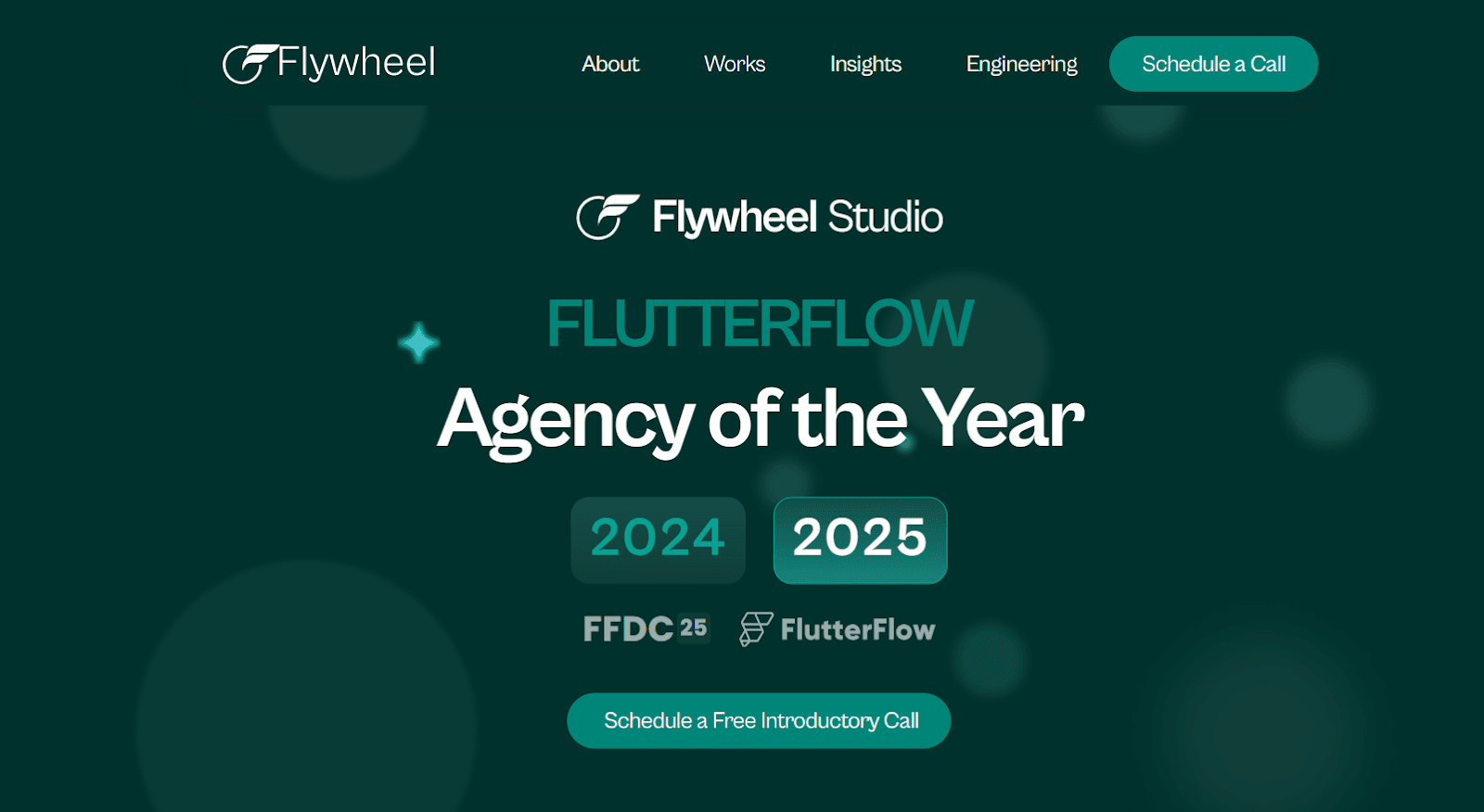
Flywheel Studio is one of the best-known FlutterFlow agencies and was recognized as FlutterFlow Agency of the Year in 2024. They operate like a product team that builds Minimum Lovable Products and complex apps using FlutterFlow plus custom code, with a strong emphasis on UX and business outcomes.
Company Details
Location: US-based, remote-first.
Website: flywheel.so
Founded: 2019.
Specialties: Product strategy, Web and mobile apps, complex FlutterFlow builds.
Pricing: Custom Quote.
Notable Works: All You, Com Tour, Shopify Delivery App.
3. Singular Innovation
Overview
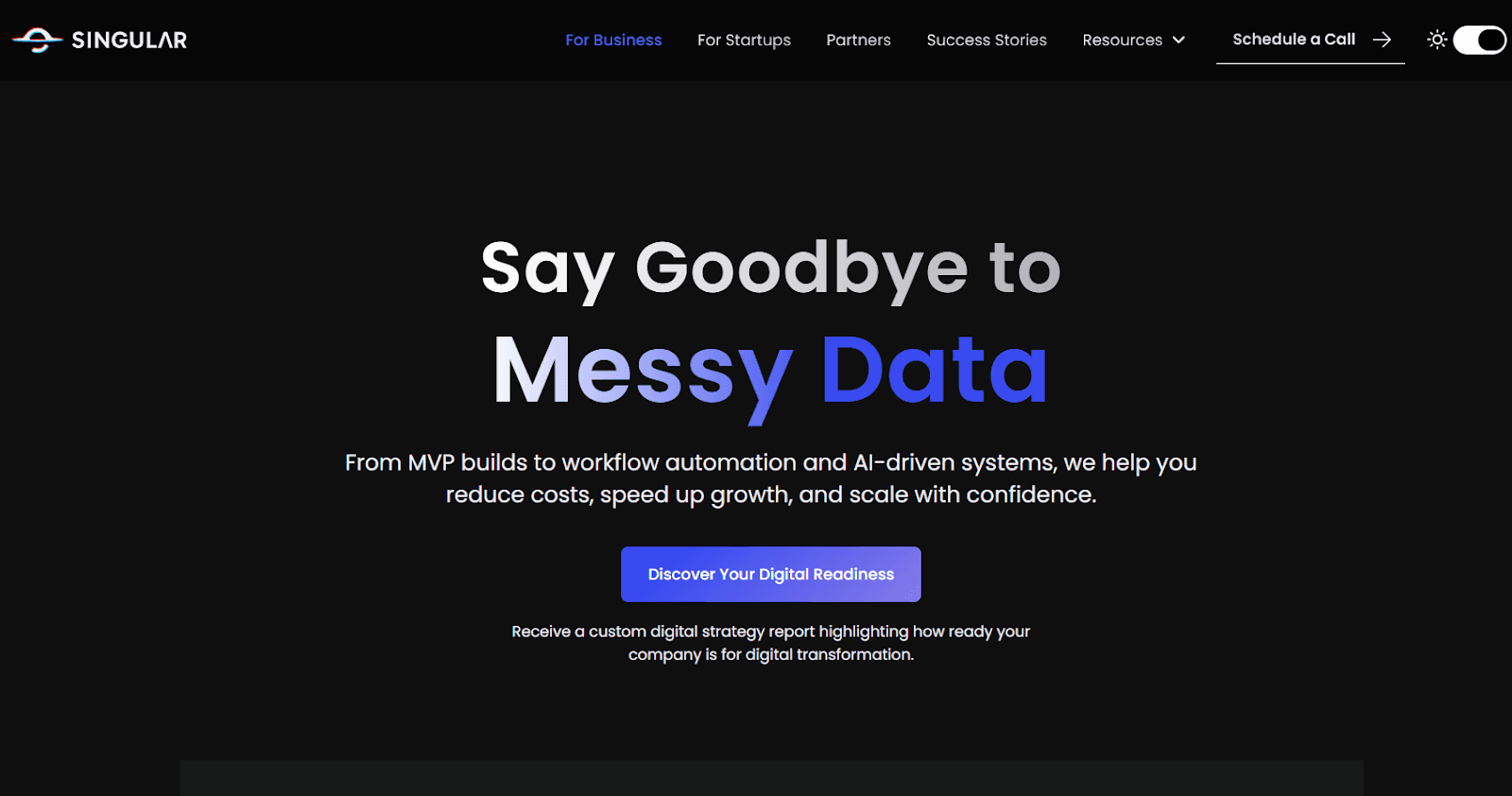
Singular Innovation combines FlutterFlow with AI, product strategy, and coaching, focusing on intelligent applications instead of basic CRUD interfaces. They publicly highlight AI-integrated web and mobile experiences and were recognized as Agency of the Year by FlutterFlow in 2024.
Company Details
Location: Florida, US (remote delivery).
Website: singular-innovation.com
Founded: 2022.
Specialties: AI products, automation-heavy workflows, strategic coaching for founders.
Pricing: Custom Quote.
Notable Clients: Disney, Globales, Ehiphi.
4. Calda
Overview
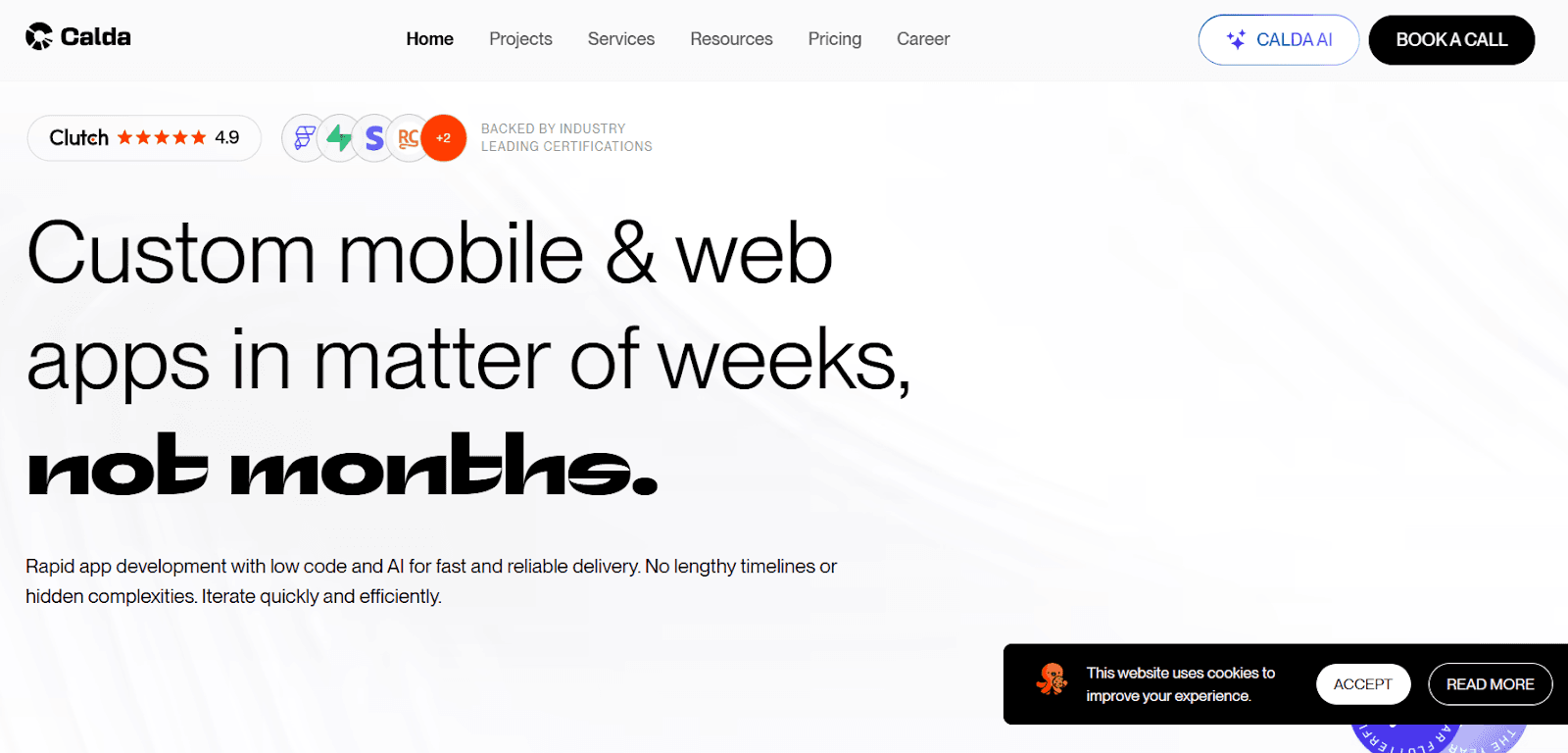
Calda is a New York-based FlutterFlow agency focused on enterprise-grade builds and was awarded Agency of the Year in the 2025 FlutterFlow Community Awards. They emphasize clean architecture, performance, and Supabase-backed systems and carry strong ratings on freelance marketplaces.
Company Details
Location: New York, US.
Website: thecalda.com
Specialties: Enterprise systems, complex backends, FlutterFlow + Supabase builds.
Pricing: Custom Quote.
Notable Works: PitchSafe, Wildsound.
5. LunarBuild LLC
Overview
LunarBuild focuses on stable, scalable FlutterFlow apps with a strong emphasis on maintainability and reliability. Marketplace signals show solid ratings and repeat work, which usually points to long-term partnerships rather than one-off experiments.
Company Details
Location: Wyoming, US (remote)
Website: lunarbuild.io
Specialties: Stable builds, refactors, maintainable architecture, long-term support
Pricing: Custom Quote.
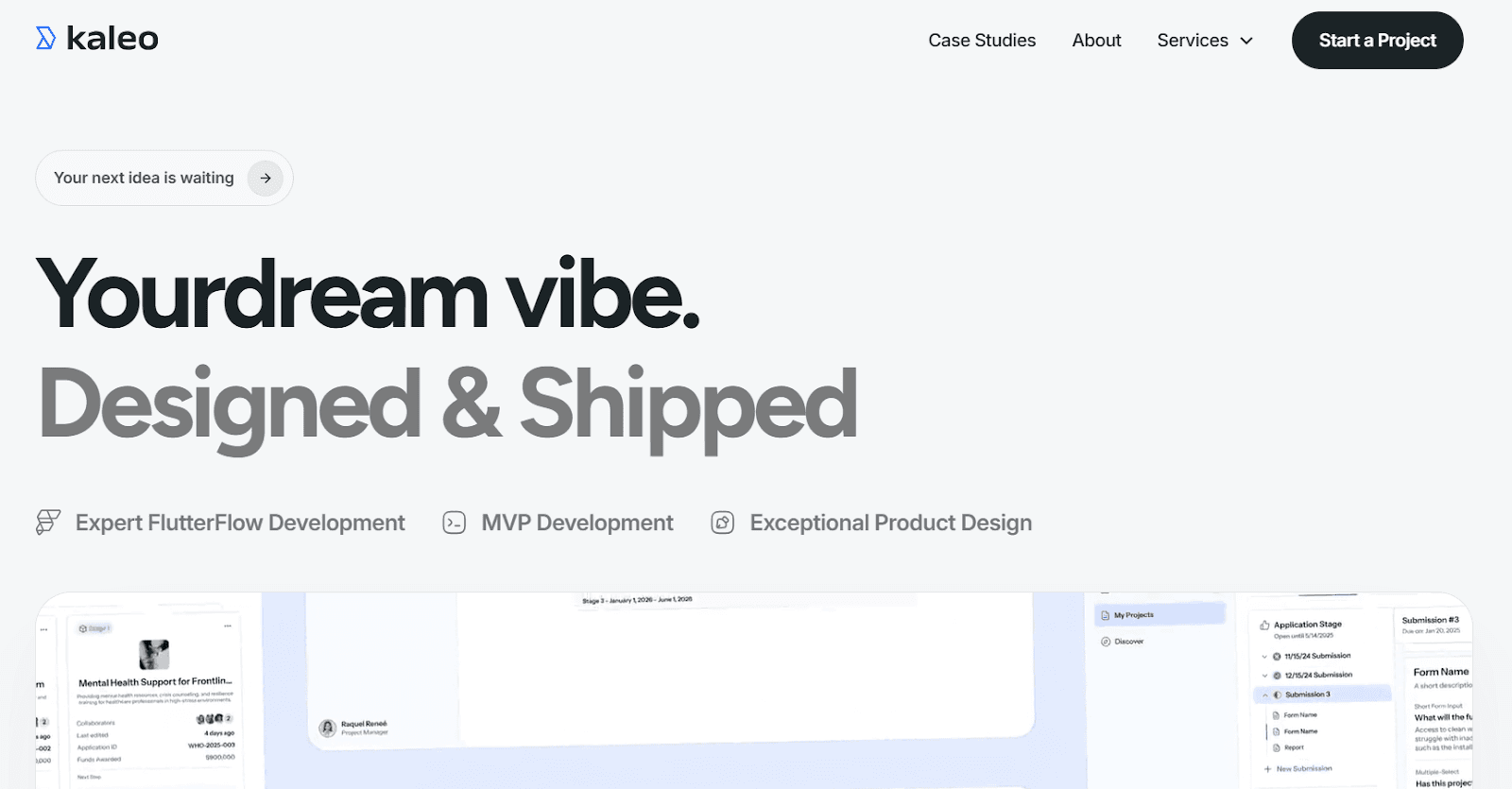
6. Kaleo Design
Overview
Kaleo Design specializes in launching MVPs quickly using FlutterFlow for founders who want to validate ideas and raise funding with a working product instead of a slide deck. Their public positioning emphasizes startup launches and practical, conversion-focused design.
Company Details
Location: Texas, US.
Website: kaleo.design
Specialties: Early-stage MVPs, startup launches, design-conscious execution.
Pricing: Custom Quote.
Notable Works: Torchy Tacos, Steader.
7. RapidDev
Overview
RapidDev blends FlutterFlow with AI and backend engineering to support more advanced use cases, including SaaS, internal tools, and AI products. Their guides on building SaaS with FlutterFlow cover architecture, data modeling, and authentication, signaling a deeper technical focus.
Company Details
Location: Boston, US (remote clients)
Website: rapidevelopers.com
Founder: 2020.
Specialties: SaaS apps, AI-enhanced products, complex integrations, backend-heavy builds.
Pricing: Custom Quote.
Notable Works: Sharp Performance, Urfuture.
8. YOHOsys
Overview
YOHOsys offers FlutterFlow development and consulting with presence on both Contra and in the FlutterFlow Experts portal. They are frequently brought in for audits, complex builds, or to improve performance and structure on existing apps.
Company Details
Location: Virginia, US
Website: yohosys.com
Founded: 2014.
Pricing: Custom Quote.
Why they stand out: FitFriendMe, Moneyu.
How Much Does FlutterFlow Development Cost in the US? (2026)
FlutterFlow reduces app development costs significantly compared to traditional Flutter or React Native builds. Most teams see savings of 30 to 50 percent on total project cost. But the actual number you will pay depends on scope, complexity, and the type of partner you choose.
Here is what the US market looks like across each category.
Freelancers - $50 to $150 per hour: Freelancers work well for clearly defined, smaller-scope projects. A simple MVP with authentication, basic screens, and Firebase integration can come in between $3,000 and $8,000 with an experienced FlutterFlow freelancer. The trade-off is bandwidth, accountability, and the absence of dedicated QA. Anything with complex logic, multi-role access, or real-time data is a riskier fit for a solo developer.
Boutique agencies - $5,000 to $20,000 per project: Small specialized studios with established FlutterFlow processes. Right for early-stage founders who need a structured build without enterprise overhead. Expect a clear discovery phase, design handoff, and a fixed-price scope for a defined feature set.
Mid-level agencies - $15,000 to $45,000 per project: This is the range for SaaS platforms, marketplaces, and apps with multiple user roles, complex backend logic, payment integrations, and real-time features. Agencies in this tier bring dedicated designers, developers, and QA running in parallel, which compresses timelines and reduces the back-and-forth that slows solo or small-team engagements.
Enterprise builds - $50,000 and above: Full-scale production apps with custom integrations, admin systems, advanced workflows, compliance requirements, and multi-platform deployment. CloseFuture has delivered projects in this range for SaaS companies, healthcare platforms, and funded startups that needed both speed and architectural depth.
Ongoing retainers - $1,500 to $10,000 per month: Retainers make sense for teams that need continuous iteration after launch. New features, landing page builds, performance optimization, A/B testing, and analytics improvements all fit this model. It avoids the overhead of scoping a new project every time you need something done.
For context, a simple MVP on FlutterFlow typically launches in 2 to 4 weeks. A mid-complexity SaaS app with integrations and custom workflows usually takes 6 to 12 weeks depending on scope and feedback speed.
CloseFuture offers project-based pricing starting at $5,000 for focused MVP builds, with transparent milestone-based delivery and no hidden fees. For teams that need ongoing development after launch, retainer options are scoped to your actual requirements.
Why CloseFuture Is the Best Pick for FlutterFlow Development in the US
CloseFuture works the way US startups operate: fast, focused, and results-driven. Their builds combine clean architecture with performance optimization and scalable systems that support long-term growth.
What sets them apart
FlutterFlow Specialists Who Deliver CloseFuture focuses specifically on FlutterFlow development with deep expertise in SaaS, AI tools, and complex integrations. They've built production apps handling thousands of users and consistently deliver clean, maintainable code.
Built for Startup Speed US startups move fast. CloseFuture matches that pace with quick turnarounds and streamlined processes. No endless revision cycles or weeks waiting for updates.
AI-Enabled Product Expertise Their experience with AI products and automation tools makes them particularly valuable for tech companies building innovative solutions. They understand how to integrate AI APIs, build intelligent workflows, and present complex tech in clear, user-friendly interfaces.
Scalable Architecture Systems They create component architectures and data models that grow with your business. Whether you're adding features, scaling users, or pivoting strategy, their apps handle it without requiring rebuilds.
Performance and Security-First Every app is optimized for speed, security, and user experience from day one. They handle proper authentication, role-based access, API rate limiting, and backend optimization as standard practice.
Post-Launch Partnership Most agencies disappear after launch. CloseFuture sticks around for performance improvements, feature additions, and technical support when you need them.
Technical Depth Beyond Templates They handle complex integrations, custom Flutter code, advanced state management, and backend architecture. If your project needs more than drag-and-drop, they have the technical depth to deliver.
Best for: SaaS founders, AI startups, marketplace builders, and companies that need production-ready apps fast without sacrificing quality or future scalability.
CloseFuture works when you want strong technical execution, real product thinking, and measurable results.
Wrapping Up
FlutterFlow has matured from an interesting experiment to a legitimate production platform, but success still depends on who's building your app. The agencies and experts listed here have proven they can deliver real products that work, scale, and stay maintainable.
The best approach: Talk to 2-3 agencies, review their portfolios carefully, and pick based on their understanding of your specific problem, not just their technical skills. The right partner will ask tough questions, push back on bad ideas, and help you build something that actually solves the problem you're trying to solve.
Don't choose based on who promises the fastest timeline or lowest price. Choose based on who understands your business best.
Q1. Is FlutterFlow good enough for production apps in the US?
Yes. FlutterFlow powers real production apps across fintech, healthcare, marketplaces, and enterprise. The platform is production-ready success depends on how well the app is architected and secured.
Q2. When should I hire a FlutterFlow agency instead of a freelancer?
Choose an agency for complex apps, multiple user roles, strong security needs, or long-term product growth. Freelancers work best for clearly defined, smaller scopes.
Q3. How much does a FlutterFlow app cost in the US?
MVPs typically start at $5k–$15k, mid-complexity apps range from $15k–$40k, and enterprise builds can reach $50k–$60k+. This is usually 30–50% cheaper than traditional development.
Q4. How fast can I launch with FlutterFlow?
Simple MVPs can launch in 2–4 weeks. More complex apps with integrations and custom workflows usually take 6–12 weeks, depending on scope and feedback speed.
Q5. Do FlutterFlow agencies in the US offer ongoing support?
Yes. Most offer post-launch support like bug fixes, feature updates, performance tuning, and maintenance—either via retainers or hourly plans.
Q6. Can I migrate my existing app to FlutterFlow?
Yes, for many apps. Simple apps migrate smoothly, while complex or heavily customized apps may be better rebuilt. Agencies can audit and recommend the best path forward.