
Key Takeaways
FlutterFlow now powers real, production-ready apps, enabling fast MVPs and scalable products with native performance across iOS, Android, and web.
Real-world apps like Vigo, GalaxyMove, Squadd, and Spendy show FlutterFlow handles complex logic, real-time data, APIs, and polished UI at scale.
CloseFuture turns FlutterFlow into a full engineering stack, combining design systems, backend integrations, and launch support to rival custom-coded apps.
FlutterFlow has quickly become one of the most influential tools in the no-code ecosystem. Startups, designers, and product teams use it to build everything from quick MVPs to full-scale mobile apps that ship on the App Store and Play Store.
What makes FlutterFlow stand out is its balance of visual simplicity and engineering flexibility. You can design screens, build logic, connect APIs, and deploy native apps without the slow dev cycles that come with traditional development.
In this article, you’ll explore the strongest examples of real FlutterFlow apps. You’ll also learn what makes them successful, how they use Firebase/Supabase, APIs, and advanced UI systems, and why brands partner with CloseFuture to achieve similar results at scale. We’ve helped dozens of startups launch stunning FlutterFlow products that rival fully custom-coded apps in speed, UI, and scalability.
Why FlutterFlow Is Powering Production Apps and Not Just MVPs
FlutterFlow is built on Google’s Flutter framework, which gives it the unique ability to create visually rich, high-performance apps for iOS, Android, and the web. The platform combines a clean visual builder with the power of Firebase/Supabase, custom APIs, and native-level animations, which makes it a favorite for design-led teams and early-stage founders.
The real strength of FlutterFlow is speed. You can design screens, connect logic, and preview interactions instantly. Features such as real-time collaboration, drag-and-drop components, and built-in authentication enable teams to transition from idea to functional prototype in days rather than months. When it is time to launch, FlutterFlow supports native code export, responsive layouts, and smooth animations that feel polished on every device.
Brands are also shifting from traditional development to FlutterFlow because it supports faster iteration, predictable budgets, and launch timelines that match startup urgency. Even companies using Webflow for marketing pages are adopting FlutterFlow for mobile-first apps where they need native performance and deeper data handling.
CloseFuture’s FlutterFlow experts use structured UI systems, custom APIs, and Supabase logic to take these builds from prototype to full-scale app stores.
Top Apps and Apps Built on FlutterFlow (2026 Edition)
1. Vigo
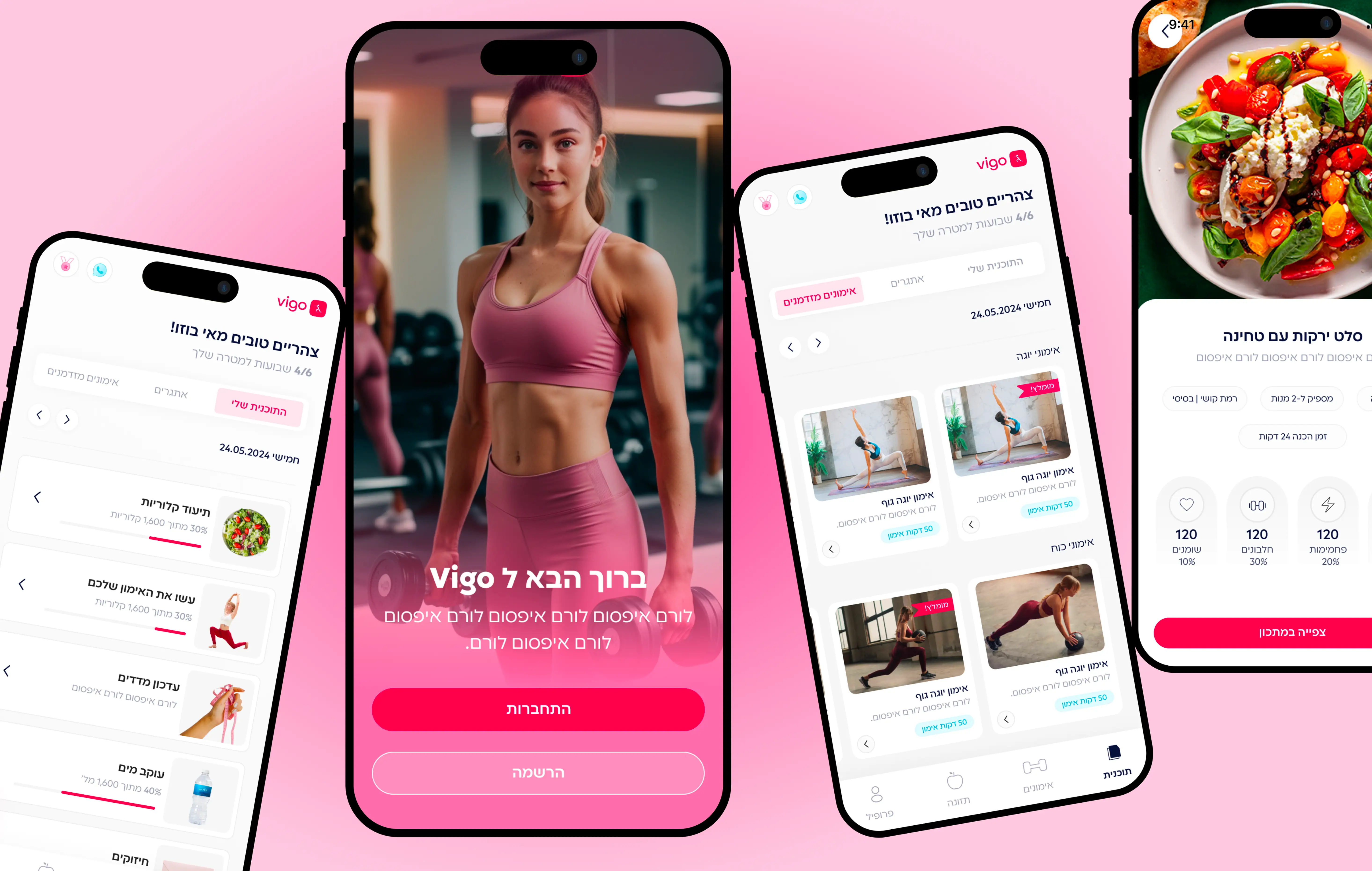
Vigo is a women-centric fitness application designed to simplify health, workouts, and daily nutrition in one place. The platform offers personalised workout plans, guided exercises, meal tracking, and AI-powered nutrition insights to help users build consistent habits. With progress visualisation, reminders, and an intuitive interface, Vigo creates a supportive environment that helps women understand their bodies better and maintain a fitness routine that fits naturally into everyday life.
What CloseFuture Built
CloseFuture developed Vigo as a fully custom, women-focused fitness platform using FlutterFlow. Our team delivered:
A smart onboarding system that captures goals, lifestyle habits, and nutrition preferences to personalise the entire experience.
Dynamic workout modules with tailored training plans and real-time activity tracking.
A responsive progress dashboard that updates as users improve, giving clear visibility into workouts, habits, and milestones.
An AI-powered meal analysis engine that reads user inputs, identifies nutritional gaps, and suggests healthier choices.
A structured meal tracking flow that makes logging meals simple and consistent.
Motivational reminders and habit nudges to encourage users and improve daily adherence.
Interactive progress visualisers that turn long-term fitness tracking into an engaging experience.
Using FlutterFlow, we built Vigo with smooth animations, fast performance, and the flexibility to scale. The result is a supportive, data-driven fitness platform crafted specifically for women and designed to make healthier living easier, more intuitive, and more inspiring.
2. GalaxyMove
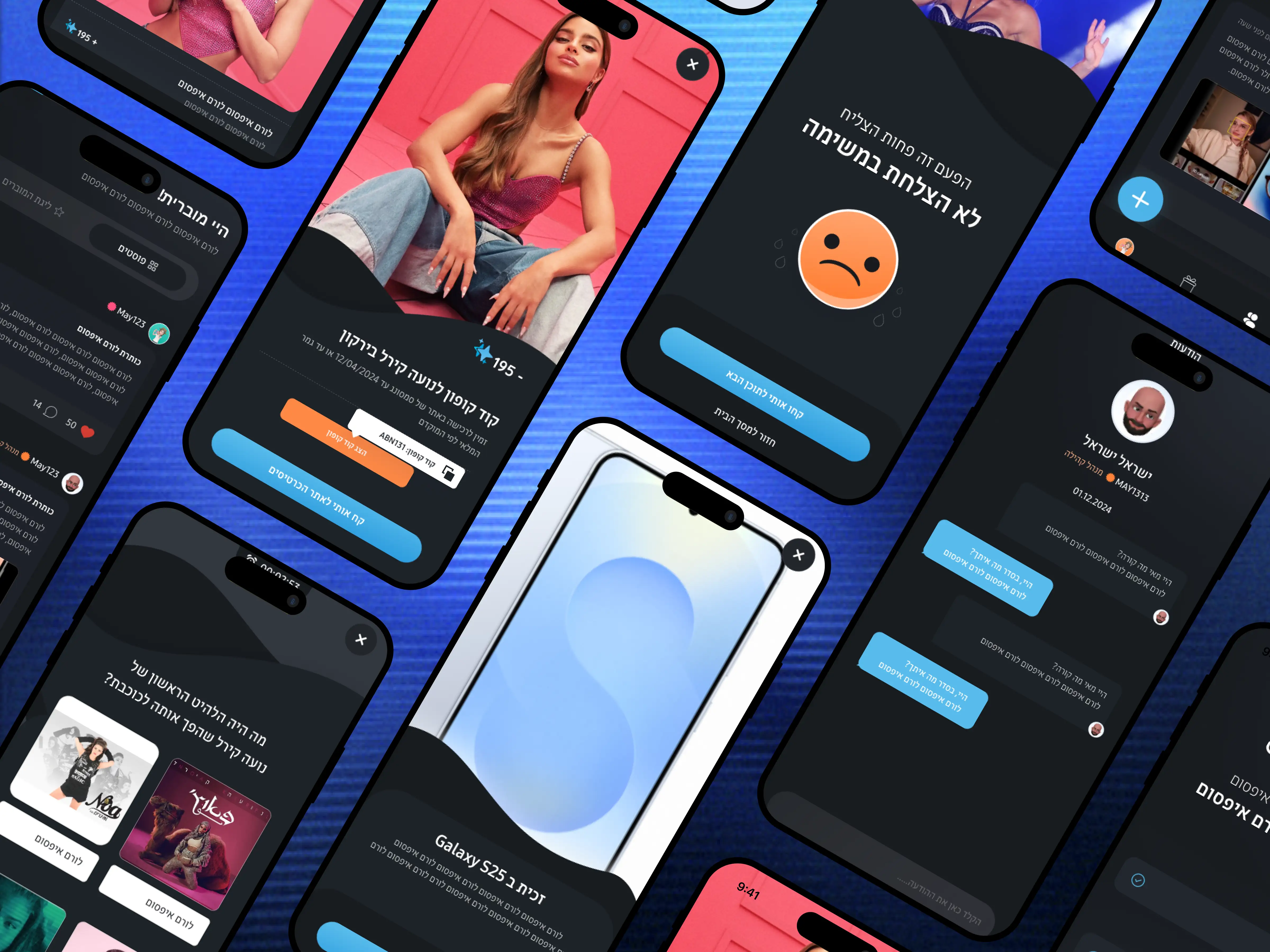
GalaxyMove is an interactive mobile platform designed to bring Samsung’s creator community and fans together in one unified space. The app allows users to share posts, explore creator content, complete gamified tasks, earn redeemable points, and access exclusive rewards. It also supports community-driven engagement through personalised media feeds, challenge-based interactions, and direct communication with platform admins. A structured role-based admin system keeps operations smooth, secure, and scalable, making the platform ideal for large communities.
What CloseFuture Built
CloseFuture developed GalaxyMove as a complete end-to-end community engagement platform using FlutterFlow. Our team built:
A dynamic content ecosystem where users can post, browse, and interact with creator media.
A fully custom gamification engine that assigns tasks, tracks user progress, and awards points.
A reward redemption system that lets users convert earned points into gifts, coupons, or exclusive perks.
Real-time communication features enable users to chat with platform admins directly inside the app.
A robust role-based admin panel, giving Super Admins full control of campaigns, content, and community settings, while Community Managers work with limited but efficient permissions.
Using FlutterFlow, we ensured smooth performance, intuitive UI design, and the technical scalability needed for a high-volume global community. The result is a polished, interactive platform that empowers Samsung to engage fans, support creators, and manage their community with ease.
3. Squadd
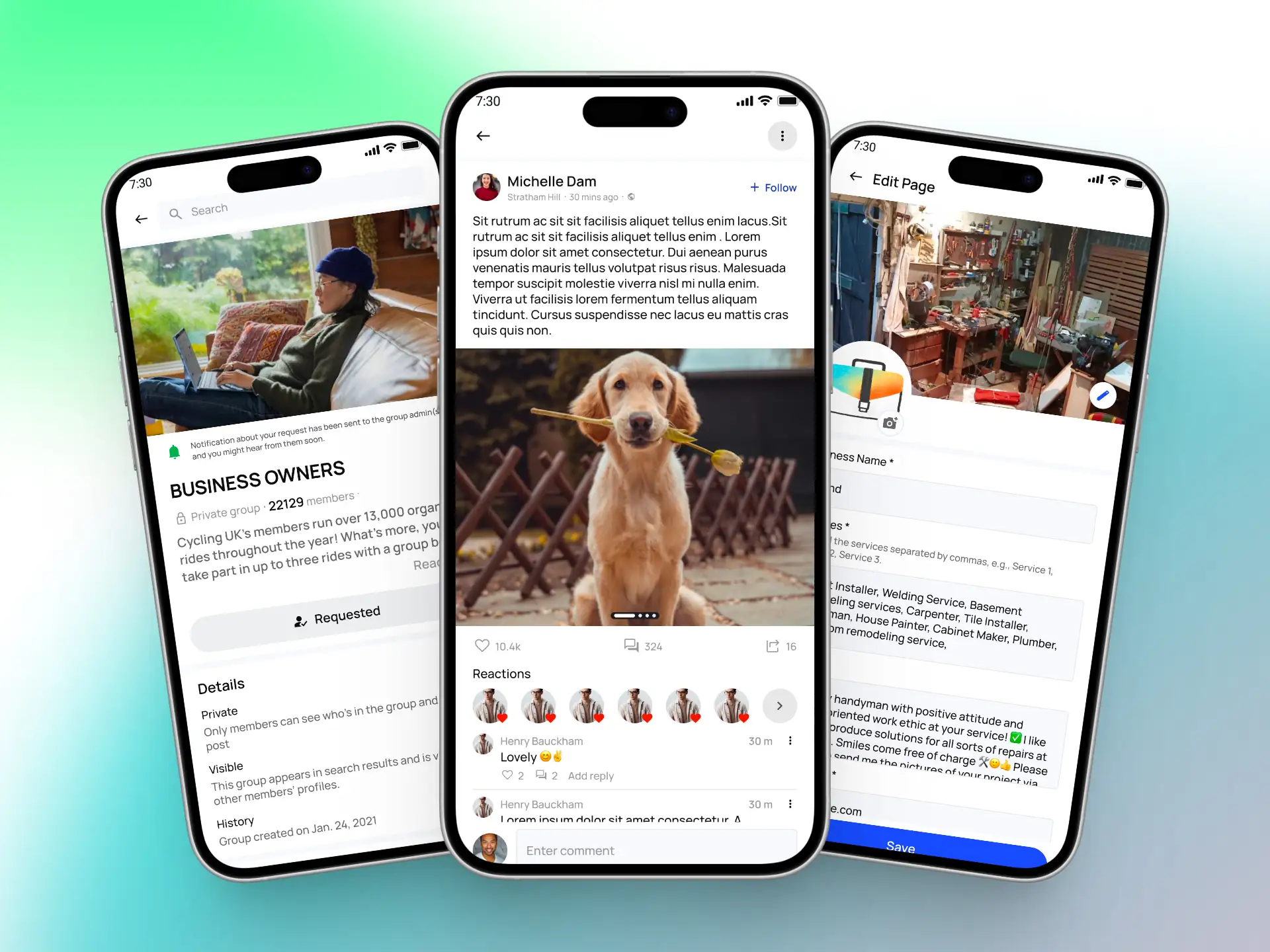
Squadd is a social community and event-driven mobile app designed for groups that want to stay connected, discover events, and engage in real-time conversations. Users can create groups, explore upcoming events, RSVP, share updates on a social-style feed, and participate in chat-like discussions. The interface feels familiar and effortless, with clean UI, smooth transitions, and fast loading states that keep users active and returning.
What CloseFuture Built
CloseFuture brought Squadd to life using FlutterFlow, blending custom development with no-code efficiency. Our team delivered:
Group and community management with the ability to create, join, and explore groups seamlessly.
Event discovery and participation workflows, including event creation, RSVPs, reminders, and real-time updates.
A dynamic social feed with Supabase-backed content fetching, optimized feed logic, and support for various post types.
Chat-style conversations built on Supabase real-time updates for fast and fluid messaging.
Custom widgets and advanced state handling to recreate the polished feel of native social apps.
Social authentication and onboarding flows that help users join quickly and get personalized content immediately.
Notification systems to improve engagement and keep groups active.
API integrations and dynamic lists to support live updates across events, feeds, and conversations.
Using FlutterFlow, we built Squadd with an architecture that mirrors traditional social platforms but without the heavy engineering overhead. The result is a highly interactive, smooth-performing community app that proves FlutterFlow can power real-time social networks when combined with the right design, structure, and engineering decisions.
4. Spendy
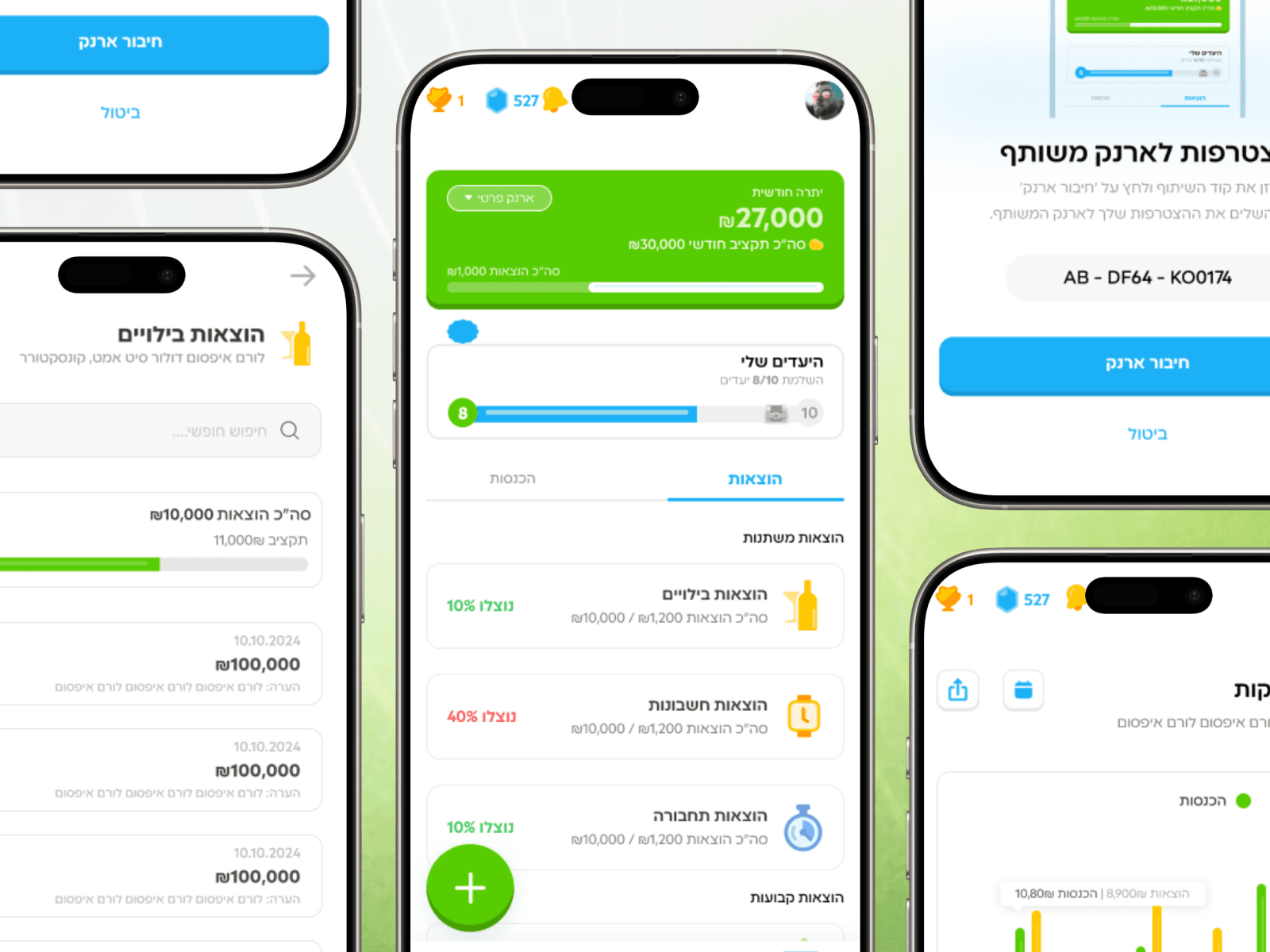
Spendy is a personal budgeting and expense tracking app designed to make money management simple and clear. Users can create category-based budgets, log expenses quickly, view monthly insights, and track spending patterns through clean visual charts. The interface is fast, minimal, and focused on helping people understand where their money goes without overwhelming complexity.
What CloseFuture Built
CloseFuture developed Spendy using FlutterFlow with a strong focus on accuracy, clarity, and scalable data handling. Our team delivered:
A structured budgeting system that lets users create and manage category-based budgets with customizable limits.
Fast expense logging flows optimized for quick entry, including shortcuts, presets, and auto-filled fields.
Custom calculation logic to generate summaries, track recurring expenses, and highlight overspending patterns.
A clean analytics dashboard featuring charts and insights that help users visualize monthly trends and financial habits.
Supabase realtime - backed relational data models to keep expenses, budgets, and insights synchronized in real time.
Secure authentication workflows for smooth onboarding and multi-device access.
Responsive UI and advanced state management for a lightweight, smooth experience on every screen size.
By leveraging FlutterFlow’s custom actions, chart widgets, and Supabase architecture, CloseFuture built Spendy to handle data-heavy workflows while keeping the interface simple and future-ready. The app proves that well-architected no-code solutions can power long-term financial products without sacrificing performance or accuracy.
Why These Apps Prove FlutterFlow Is Production-Ready
The apps highlighted above aren’t simple demos or one-off experiments. They are fully functional products used by real customers, investors, and teams. Each example demonstrates that FlutterFlow has matured into a platform capable of delivering production-grade performance at scale.
These apps ship to both the App Store and Play Store with stable builds that match the polish of traditionally coded applications. They integrate with reliable infrastructure like Firebase/Supabase, third-party APIs, Revenuecat, and analytics stacks, which is essential for SaaS products, marketplaces, and fintech tools. The UI interactions and animations feel smooth and native because FlutterFlow outputs clean Flutter code under the hood.
Another important signal is how fast-growing startups are now adopting FlutterFlow for their first launch or even complete rebuilds. Time to market matters more than ever, so founders are choosing to work with established FlutterFlow agencies like CloseFuture to accelerate design, development, and iteration cycles.
FlutterFlow proves that you can launch quickly, maintain quality, and still scale without rebuilding everything from scratch. And the real-world products already succeeding on the platform are the strongest proof.
What Makes a FlutterFlow App Production-Ready? Technical Checklist
A FlutterFlow app isn’t production-ready just because it runs without errors. The difference between a demo and a real product is what happens under the hood.
Here’s a practical checklist teams should cover before launch:
1. Backend and data structure
Database is properly structured (no messy or duplicated collections/tables)
Relationships between entities are clearly defined
Queries are optimized for performance, not just functionality
A weak data structure is one of the biggest reasons apps fail at scale.
2. Authentication and access control
Secure login flows (email, OAuth, etc.) are in place
Role-based access is implemented (admin, user, etc.)
Sensitive data is protected at the backend level
This becomes critical the moment real users enter the system.
3. API and integrations
All third-party integrations are stable and error-handled
APIs are not exposing unnecessary data
Fallbacks are in place for failures (payments, external tools, etc.)
Most production issues come from integrations, not UI.
4. Performance and responsiveness
Screens load efficiently without unnecessary API calls
App works smoothly across devices and screen sizes
Heavy operations are optimized or deferred
Fast apps retain users. Slow apps lose them.
5. Error handling and edge cases
Proper error states are defined (not just blank screens)
Edge cases are tested (empty data, failed requests, user drop-offs)
Logs or monitoring are in place
A production app should fail gracefully, not silently.
6. Deployment and scalability readiness
Backend (Supabase/Firebase) is configured for expected load
Environment variables and keys are secured
App is tested under realistic usage scenarios
Launch is not the goal. Stability after launch is.
How Much Does It Cost to Build These Types of Apps with FlutterFlow?
The cost of a FlutterFlow app depends heavily on the type of product you’re building, not just the tool itself.
Here’s what startups typically invest based on app category:
App Type | What It Includes | Estimated Cost (2026) |
Simple MVP | Basic user flows, limited features, early validation | $6,000 – $10,000 |
SaaS Application | Auth, dashboards, user roles, integrations | $10,000 – $22,000 |
Marketplace / Platform | Listings, payments, multi-user interactions | $20,000 – $45,000 |
Social / Community App | Feeds, interactions, notifications, real-time features | $25,000 – $45,000+ |
Enterprise App | Advanced workflows, scalability, security layers | $30,000 – $70,000 |
What drives the cost in each case
Even within the same category, pricing can vary based on:
Complexity of features and workflows
Backend architecture (especially with Supabase)
Number of integrations (payments, analytics, APIs)
Level of UI/UX customization
Scalability requirements from day one
The important distinction
FlutterFlow reduces development time and cost compared to traditional builds. But it doesn’t eliminate the need for:
Strong architecture
Clean backend setup
Thoughtful product design
How CloseFuture Builds Production-Ready FlutterFlow Apps
Building a great FlutterFlow product goes beyond dragging elements onto a canvas. It demands structure, technical depth, and a process that treats FlutterFlow like a real engineering environment. That’s where CloseFuture stands out. Our team blends design precision, product thinking, and backend expertise to deliver apps that perform as well as fully custom-coded builds.
End-to-End Development
We take your product from idea to launch in one integrated workflow. Our process covers everything from UX research and UI design to FlutterFlow architecture, Firebase/Supabase or Supabase setup, testing, and publishing to app stores. This avoids handoff delays and ensures every part of your product is aligned with your business goals. The result is a smooth, fast, and predictable build process.
Custom API and Backend Integrations
A production-grade app needs more than screens. It needs logic. We integrate payment gateways, chat systems, analytics, CRM data, Stripe, Plaid, Maps, and other third-party APIs directly into your FlutterFlow build. Our team also structures your backend for scale, making sure database rules, security, and automation logic are handled correctly from the start. This is why our apps feel robust, reliable, and ready for real users.
Design Systems for Scalability
Every CloseFuture project runs on a modular design system created specifically for FlutterFlow. This keeps your UI consistent, improves development speed, and allows you to scale without redesigning the entire product each time you add a feature. Because everything is component-based, your team can extend or iterate confidently even after launch.
Launch, Support, and Maintenance
Our work doesn’t end at the app stores. CloseFuture offers long-term support with ongoing optimization, bug fixes, A/B testing, analytics setup, and new feature rollouts. We help you evolve your product based on real user data so your app grows stronger with each update rather than stagnating after launch.
Want your next app featured in FlutterFlow’s showcase? Let’s build it together at CloseFuture.
Conclusion
FlutterFlow has quickly moved from being a no-code experiment to a reliable, production-level platform trusted by modern startups. The real-world apps showcased above prove that it can handle scale, performance-heavy use cases, and polished design without the long timelines of traditional development.
For founders who want speed without sacrificing quality, CloseFuture brings the perfect balance. We combine design-first thinking with deep product and backend expertise to help you build, launch, and scale apps that stand out in both usability and performance.
If you’re ready to turn your idea into a launch-ready FlutterFlow product, CloseFuture is the partner that gets you there faster and with complete confidence.
Ready to turn your idea into a launch-ready app or site? Partner with CloseFuture, your expert FlutterFlow agency for fast, scalable, and visually stunning builds.
Q1: Are FlutterFlow apps reliable for production use?
Yes. Built on Google’s Flutter framework, FlutterFlow can deliver production-ready, high-performance apps with the right architecture, optimized backend, and proper QA.
Q2: Can FlutterFlow handle Firebase/Supabase and third-party APIs?
Absolutely. FlutterFlow integrates with Firebase or Supabase for auth, data, storage, and analytics, and connects easily to third-party APIs for payments, chat, CRM, notifications, AI workflows, and more.
Q3: What are the best real-world apps built on FlutterFlow?
Examples include Vigo (Fitness), Spendy (Finance), TaskPilot (Productivity), and various education and marketplace apps featured in FlutterFlow’s official gallery.
Q4: Is FlutterFlow good for startups and SaaS companies?
Yes. FlutterFlow helps startups launch and iterate MVPs faster, while SaaS teams benefit from reusable components, streamlined backends, and multi-platform delivery.
Q5: How does CloseFuture build scalable FlutterFlow apps?
CloseFuture uses a structured approach with design systems, modular components, strong backend integrations, and clean architecture—backed by strategy, QA, and post-launch support.